- By Saurabh Smar, Principal Solicitor, Global Vision Migration Lawyers
- 17 Sep, 2026
Announced Today. Here Is What You Need to Know.
On 17 September 2026, Home Affairs Minister Tony Burke addressed the National Press Club and announced the most significant package of migration changes Australia has seen in years.
These are not proposed reforms pending legislation. The majority are administrative changes the Government can make under existing powers, and several take effect immediately.
If you are on a visitor visa, a student visa, a working holiday visa, or planning to apply for any of these, your options have changed. If you are an employer relying on skilled workers or an international student with family in Australia, the landscape has shifted under you today.
At Global Vision Migration Lawyers, immigration lawyer Saurabh Smar has reviewed the announcement in full. This is what it actually means.
The Policy Shift: From Forecast to Target
The starting point is understanding what the Government is trying to achieve. Net overseas migration currently sits at 292,100 for the year to March 2026, well above the Treasury budget target of 245,000. The Government's stated path is 245,000 this financial year, reducing to 225,000 by 2027-28.
To get there, the framing has changed. Migration is no longer described as a demand-driven forecast. It is now a managed target organised around who arrives, who stays, and who leaves.
That shift in language matters because it signals that the Department will be actively managing departures and extensions, not simply approving applications that meet criteria.
The Six Changes That Affect the Most People
1. No Further Stay on Visitor Visas
A "no further stay" condition will apply to all visitor visas, subject to some exemptions. This means visitor visa holders will be significantly restricted from applying for other visas while in Australia. The era of arriving on a visitor visa and transitioning onshore to another temporary visa is being closed down as a general practice.
2. Student Visa Hopping Ends
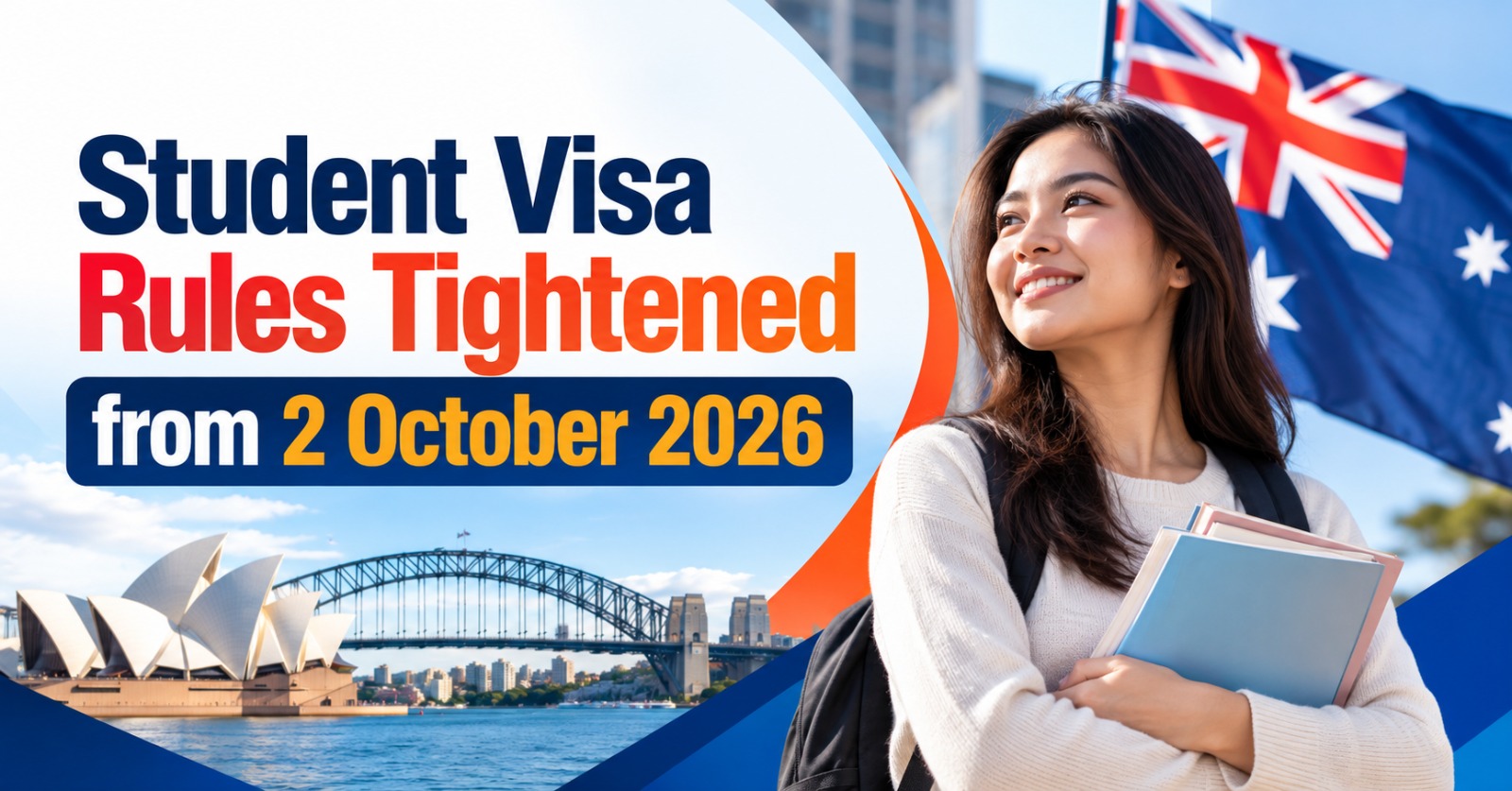
International students who complete a course will only be able to move to a course at a higher qualification level. A bachelor's degree graduate can apply for a master's. Moving across to a different bachelor's degree at a different institution, or moving down to a lower qualification, will no longer be a path to extending a student visa. Minister Burke was explicit: using sequential student visas to extend an Australian stay without genuine academic progression will end.
3. International Students Cannot Bring Most Family Members
Most new international students will be blocked from bringing family members to Australia as secondary applicants. Last financial year, 45,991 student visa secondary applicants were granted mostly family members. That number is expected to fall sharply under the new rules.
4. Working Holiday Ballot System
Working holiday visa extensions move to a ballot system. 45,000 places will be available for a second year. Only 5,000 places will be available for a third year. The third-year working holiday extension previously had no regional work requirement, making it the most accessible extended stay option for backpackers. That is where the sharpest reduction lands.
5. Overstayer Crackdown
The Government is reverting to the pre-2015 approach to overstayers: detention and prompt departure. 100 new compliance officers will be deployed. People who are in Australia unlawfully should not assume the prior tolerance will continue.
6. Sanctions for Migration Agents
Sanctions are flagged for migration agents who encourage visa applications without merit or who facilitate visa hopping arrangements. This is aimed at the section of the industry that has been helping applicants structure sequential visa applications specifically to extend their stay rather than for genuine migration purposes.
Who Benefits: Skilled Workers in Priority Sectors
The crackdown is not across the board. The Government has been explicit that skilled migration in construction, healthcare, education, defence, and agriculture remains prioritised and supported.
Construction tradespeople will score university-level points under skilled migration points test reform. Minister Burke pointed to the tripling of construction worker numbers in the skilled migration system and framed this as a direct response to the housing crisis.
Agriculture and fisheries receive a new ministerial direction prioritising their visa processing.
Post-study work rights for students under the India Free Trade Agreement will be honoured.
The Government's argument against opposition proposals to halve family-linked migration is grounded in workforce dependency: it claims halving that stream would cost half of all doctors and construction workers and two-thirds of nurses and aged care workers.
Real-World Scenarios
The visitor visa holder planning to apply onshore:
Someone in Australia on a Subclass 600 visitor visa who planned to lodge a partner visa application onshore needs immediate advice on whether the no further stay condition applies to their visa and whether an exemption is available. Acting before the condition is formally applied to their grant may be critical.
The international student with a spouse in Australia:
A student whose spouse is currently in Australia as a secondary applicant on their student visa needs to understand whether the new family restriction affects their current arrangements and what happens at renewal.
The working holiday maker on a second year:
Someone currently on a second-year working holiday visa who had planned to apply for a third year needs to understand the ballot system, when it opens, and what their realistic chances are given the 5,000 place cap.
The construction employer ready to sponsor:
A building company that has identified an overseas tradesperson or has an onshore worker they want to sponsor is in a strong position. Priority processing, points test reform favouring tradespeople, and political support for this cohort all support moving quickly.
Frequently Asked Questions
Does the no further stay condition apply to existing visitor visas or only new ones?
The announcement indicates the condition will apply to visitor visas going forward. Whether it applies retrospectively to already-granted visitor visas and in what circumstances depends on the specific ministerial instrument implementing the change. Confirm your current visa conditions immediately with a lawyer.
Can I still bring my family as a student?
Most new international student visa holders will be blocked from including family members as secondary applicants. Existing arrangements may be protected depending on when the visa was granted, but this needs to be confirmed against the implementing instrument.
What happens if I am already in Australia on a visitor visa and want to apply for a partner visa?
This depends on the specific conditions of your visitor visa and whether an exemption applies to partner visa applications. This is a high-stakes question and needs immediate legal advice rather than a general answer.
Is the third-year working holiday extension gone entirely?
No, but it has been dramatically restricted. Only 5,000 places will be available for a third year through a ballot system, down from the previously open-access arrangement. The ballot system and opening dates have not yet been published.
Will the points test reform for construction workers apply immediately?
The announcement flagged the reform as policy intent. The specific legislative or regulatory instrument implementing it will determine the effective date. Monitor the Department of Home Affairs website and seek advice from an immigration lawyer on timing.
What does the overstayer crackdown mean for people on bridging visas?
People on lawfully granted bridging visas are not overstayers. The crackdown targets people who are unlawfully in Australia, meaning those whose visa has expired without a valid bridging visa in place. If you are on a bridging visa, confirm your status is current and your conditions are being met.
Are migration agents affected by the sanctions announcement?
Sanctions are flagged for agents who knowingly encourage visa applications without merit or facilitate visa hopping. This does not affect agents and lawyers providing legitimate advice. It targets those whose practice has been structuring sequential applications specifically to extend stays without genuine migration purpose.
What You Should Do Right Now
Today's announcement changes the risk profile for a significant number of people currently in Australia on temporary visas. If your circumstances fall into any of the categories affected by today's changes—visitor visa, student visa, working holiday, or a planned onshore transition—the window to understand your options before the administrative instruments take effect is right now.
At Global Vision Migration Lawyers, immigration lawyer Saurabh Smar and our team of admitted legal practitioners are available to assess your current visa status, advise on how today's changes affect your specific situation, and identify the options available to you before they close.
Speak with our team
Call us on 0430 081 804 or visit https://gvm.com.au/book-a-consultation to book a consultation.
We are available across Melbourne, Sydney, Canberra, Perth, and the Gold Coast.